


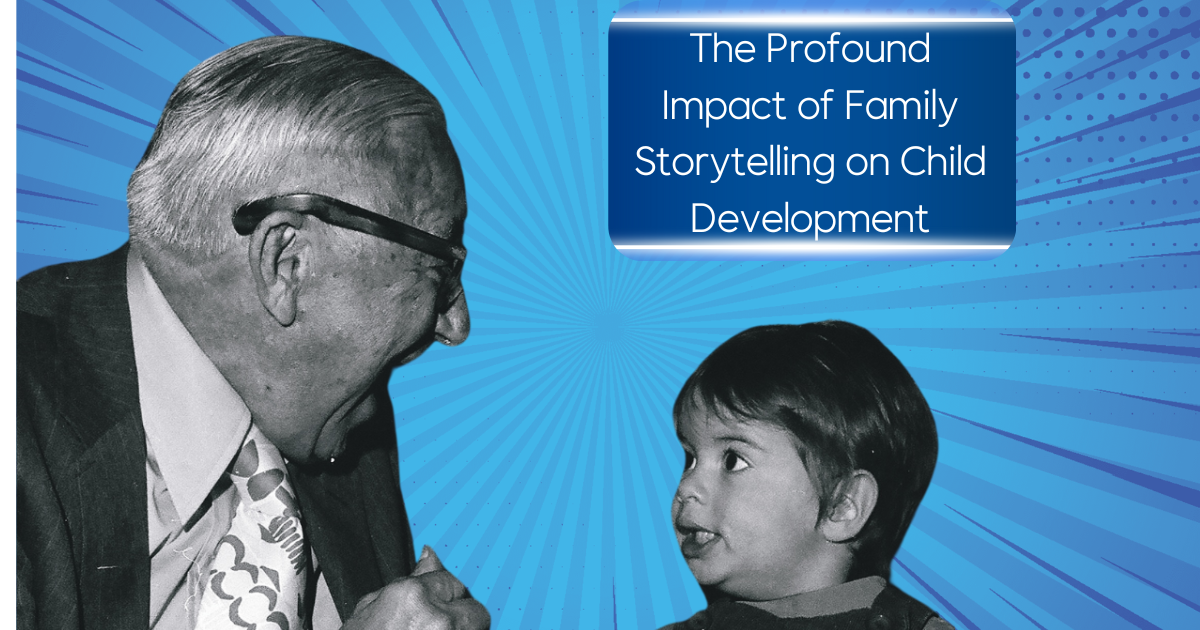
Family Storytelling Unlocks Powerful Neurological Benefits Across Generations
Stories bind us together. When we share narratives across generations, we’re not simply exchanging information – we’re activating neural pathways that strengthen family bonds in measurable ways. The science behind family storytelling reveals why these shared narratives hold such profound importance for our collective identity and psychological well-being.
As our digital world accelerates, the ancient practice of family storytelling takes on renewed significance. Research consistently demonstrates that families who maintain strong narrative traditions exhibit greater resilience, cohesion, and intergenerational understanding. This isn’t merely anecdotal; it’s backed by robust scientific evidence spanning multiple disciplines.
The Neuroscience of Family Narratives
When family members share stories, their brains synchronize in remarkable ways. Functional MRI studies reveal that both storytellers and listeners experience neural coupling – a phenomenon where brain activity patterns align during narrative exchange. This synchronization facilitates deeper understanding and emotional connection between generations.
Princeton neuroscientist Uri Hasson’s research demonstrates that during effective storytelling, the listener’s brain activity mirrors the speaker’s with only a slight delay. This neural synchrony creates a powerful bridge between individuals, regardless of age differences. For families, this means grandparents sharing stories with grandchildren aren’t just passing time – they’re creating literal neural connections that transcend generational gaps.
The implications extend beyond momentary connection. Regular exposure to family narratives strengthens neural pathways associated with empathy, perspective-taking, and autobiographical memory. Children who grow up immersed in family stories develop more robust identity structures and greater psychological resilience.
Identity Formation Through Shared Stories
Psychologists at Emory University found that children who know their family history display stronger self-identity and lower anxiety levels. Their research established a correlation between knowledge of family narratives and higher scores on measures of emotional well-being and resilience.
Family stories provide crucial context for individual identity formation. They answer fundamental questions: Where do I come from? What values define my family? How have my ancestors overcome challenges? This narrative framework helps individuals, particularly adolescents, situate themselves within a larger continuum of family experience.
The most effective family narratives balance three key elements: stories of success, stories of failure and recovery, and stories of everyday experiences. This oscillating narrative pattern creates what psychologists call an “intergenerational self” – an identity that extends beyond individual experience to encompass family history.
Preserving Voices Preserves Cognitive Patterns
Voice contains multidimensional information beyond mere words. Linguistic analysis reveals that vocal patterns carry cultural markers, emotional resonance, and cognitive frameworks unique to individuals and generations. When we preserve family voices, we capture these complex cognitive signatures.
Cognitive scientists studying intergenerational knowledge transfer have identified voice as a primary carrier of both explicit and implicit information. The specific cadence, terminology, and vocal characteristics of family members encode cultural knowledge that written transcripts alone cannot capture.
This scientific understanding informs our approach at Family Voices AI. By focusing on voice preservation alongside narrative content, we enable families to maintain not just what was said, but how it was expressed – preserving cognitive patterns and emotional resonance that might otherwise be lost between generations.
Technology as Narrative Preservation Tool
Technological advances now allow us to preserve family narratives with unprecedented fidelity. Voice cloning technology, when applied ethically, serves as a powerful tool for maintaining intergenerational connections even after physical separation.
The application of artificial intelligence to family legacy preservation represents a significant advancement in how we maintain narrative continuity. Rather than replacing traditional storytelling, these technologies amplify existing practices by overcoming limitations of time, distance, and mortality.
Research in human-computer interaction demonstrates that voice-based digital representations create stronger emotional responses than text-based alternatives. When family members interact with voice-preserved narratives, they experience greater psychological presence and emotional engagement than when reading identical content.
Practical Applications of Family Narrative Science
Families can leverage these scientific insights through several practical approaches. Interactive family trees based on voice recordings create multisensory engagement with family history. Regular storytelling sessions, whether in-person or virtual, strengthen neural synchrony between generations. Targeted interview protocols can elicit narratives that build resilience and identity.
The person who takes responsibility for collecting family stories – often called the “family historian” or “kinkeeper” – plays a crucial role in maintaining narrative continuity. Research shows these individuals significantly impact family cohesion across generations by facilitating story transmission.
For those interested in preserving family narratives, starting with simple voice recordings of everyday conversations often yields more authentic results than formal interviews. The natural cognitive patterns emerge most clearly in relaxed, unstructured storytelling environments.
Future Directions in Family Narrative Research
Emerging research suggests that interactive AI agents may soon serve as effective repositories and transmitters of family narratives. The ability to engage dynamically with preserved family stories through conversational interfaces represents the next frontier in narrative preservation technology.
Longitudinal studies tracking families who systematically preserve narratives show promising outcomes for younger generations, including stronger identity formation, greater historical consciousness, and enhanced family cohesion. These benefits appear most pronounced when preservation methods maintain vocal and emotional elements alongside factual content.
The scientific evidence is clear: family storytelling isn’t merely a sentimental practice but a neurologically powerful tool for strengthening intergenerational bonds. By understanding and applying these insights, families can create narrative legacies that support identity, resilience, and connection across generations.
As we navigate an increasingly digital world, the science of family storytelling reminds us that our most valuable technological applications may be those that strengthen our most fundamental human connections. The voice of a grandmother sharing childhood memories, the distinctive laugh of a grandfather telling family jokes, the verbal patterns that distinguish your family’s unique communication style – these elements carry cognitive and emotional significance that transcends generations.
By preserving these narrative elements through thoughtful application of technology, we don’t just maintain memories. We create living bridges between past, present, and future family members, allowing the neural synchrony of storytelling to connect generations in profound and lasting ways.