


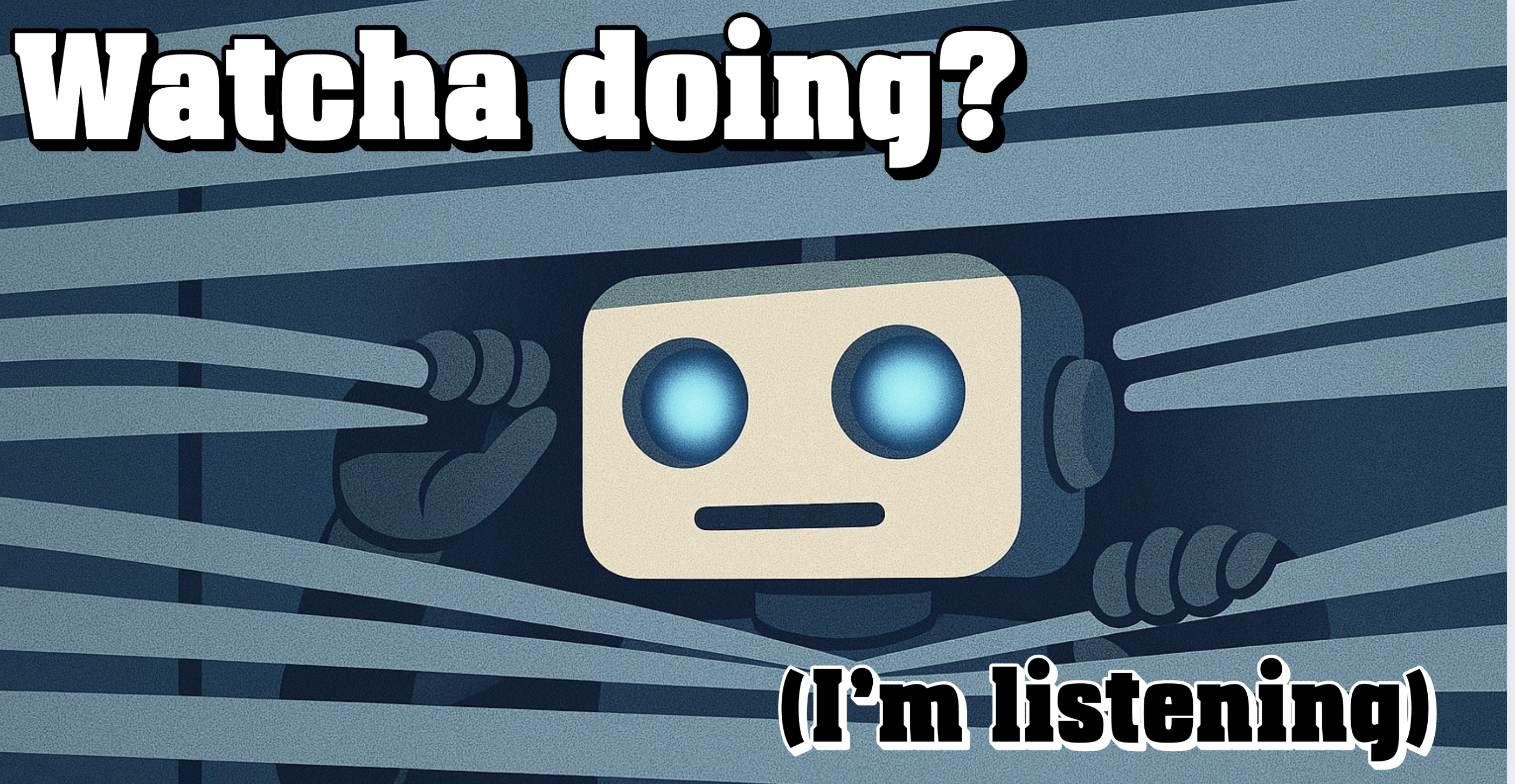
Your voice is already stolen. That’s the uncomfortable truth I discovered during the 2023 entertainment industry strikes. As a composer and audio professional suddenly with time on my hands, I started exploring the world of AI voice technology. What I found was both fascinating and disturbing.
While we worry about whether to give permission for our voices to be cloned, the reality is that our smartphones, smart TVs, digital assistants, and even our cars are already recording us. They’re listening, analyzing, and collecting our vocal data without any meaningful consent. The battle for privacy through opting out, deleting cookies, or covering cameras is largely symbolic. The collection happens whether we want it to or not.
So what can we actually do about it? My conclusion was simple but counterintuitive:
if I don’t clone my voice on my own and claim it on my own, then it’s just going to be done without my permission.
This realization changed everything for me.
Your Vocal Fingerprint
Think about your voice as your vocal fingerprint. It’s uniquely yours, yet in our digital world, that fingerprint is being collected, analyzed, and potentially used without your knowledge or benefit. The only way to truly be proactive is to claim your own vocal print and say, “This is mine.”
It’s similar to claiming your name on social media. If you don’t create “the real you” account, someone else might take your name and speak for you. By proactively cloning your voice through ethical means, you’re essentially saying, “This is my real voice, and if it didn’t come from this source, then it wasn’t me.”
When people hear about voice cloning, they often worry it’s surrendering more privacy. But that gets it backward. The privacy has already been compromised. The choice now is whether you want to have any control over how your voice is used.
“If you’re going to use it, then I’m going to use it too.” And I’m going to use it in a way that matters.
A Gift Across Generations
There’s a profound difference between how tech companies use our voices and personal voice preservation. When you collect your voice for family legacy, you’re giving a gift to future generations. It says, “I thought about you. I want to still be a part of your life, even when I’m not physically there.”
I experienced this personally after my father died. Just visiting with his voice clone felt deeply comforting. I knew it wasn’t really him. I knew it wasn’t answering exactly as he would. I wasn’t trying to create a virtual version of him. But being able to share space with his voice, to hear him tell stories I may have already heard, all of that provided comfort I hadn’t expected.
Corporate voice collection lacks this intimacy. When big companies collect your voice data, they’re training their AI models. You’re exchanging your personal data for services that seem free but actually come at the cost of your digital identity. And unlike family preservation, there’s no emotional value returned to you.
The Unexpected Catharsis
Working with families to preserve their voices has revealed something I never anticipated. The person telling the stories often receives as much comfort as the person who will eventually hear them.
People love talking about themselves and their experiences, especially toward the end of their lives. They want to understand what it all meant. Recalling stories and knowing they’ll be retold in their own voice gives these stories a sense of immortality. It helps people make sense of their journey.
Many of our customers have told us that the process created an opportunity to share stories they had never shared before. The act of preserving their voice became a way of holding space for their experiences, of acknowledging their significance.
Heads in the Sand
Despite these benefits, I’ve encountered plenty of resistance. Some of my own family members won’t participate because they’re afraid their data will be stolen. The irony is that their data has already been taken.
Their voices have already bee
n recorded countless times by the devices they use daily.
We offer options for those with concerns. We can clone your voice, or we can simply record your stories without cloning. But the resistance often comes from a place of not realizing what’s already happening. People have their heads in the sand about how their voice data is already being used without their knowledge or consent.
I suspect this will change. As someone nears the end of their life and knows their voice has been recorded, they may decide, “Well, you can go ahead and clone it because I want to be immortal.” But right now, many people remain unaware of what they’ve already given away.
Taking Back Control
In 50 years, everyone will likely have virtual versions of themselves created by big corporations. But these corporate versions will lack the intimacy and authenticity of family-preserved voices. The difference will be whether you had any say in how your voice was used.
For everyday families who aren’t tech experts, the best approach is to work with companies that guard your data, don’t sell it, and allow you to control or delete it as you see fit. Look for services that prioritize your ownership rather than treating your voice as just another data point to be exploited.
The future of voice technology is coming whether we like it or not. The question isn’t whether to participate, but how to participate on your own terms. By proactively claiming and preserving your voice, you’re not just protecting your digital identity. You’re creating a legacy that connects generations in a deeply personal way.
Your voice is already out there. The only question is whether you’ll have any say in how it’s used. I believe we should benefit from our own personal data. We can’t help but give it away in today’s world, but we can also say, “If you’re going to use it, then I’m going to use it too.” And I’m going to use it in a way that matters.
For more information reach me at :
JG@FamilyVoicesAI.com