


AI evolved faster than anyone predicted. What started as simple algorithms has transformed into systems that can write essays, create art, and even clone your voice. Yes, AI helped me improve this article! Understanding this evolution helps us see where we’re headed next.
I’ve watched this technology develop from a distance until recently. When the Hollywood strikes gave me predicted time off last year, I dove into exploring how AI could improve people’s lives, particularly in preserving family legacies. What I discovered was a clear hierarchy of AI capabilities that tells us much about where we’re going.
The Foundation Layer
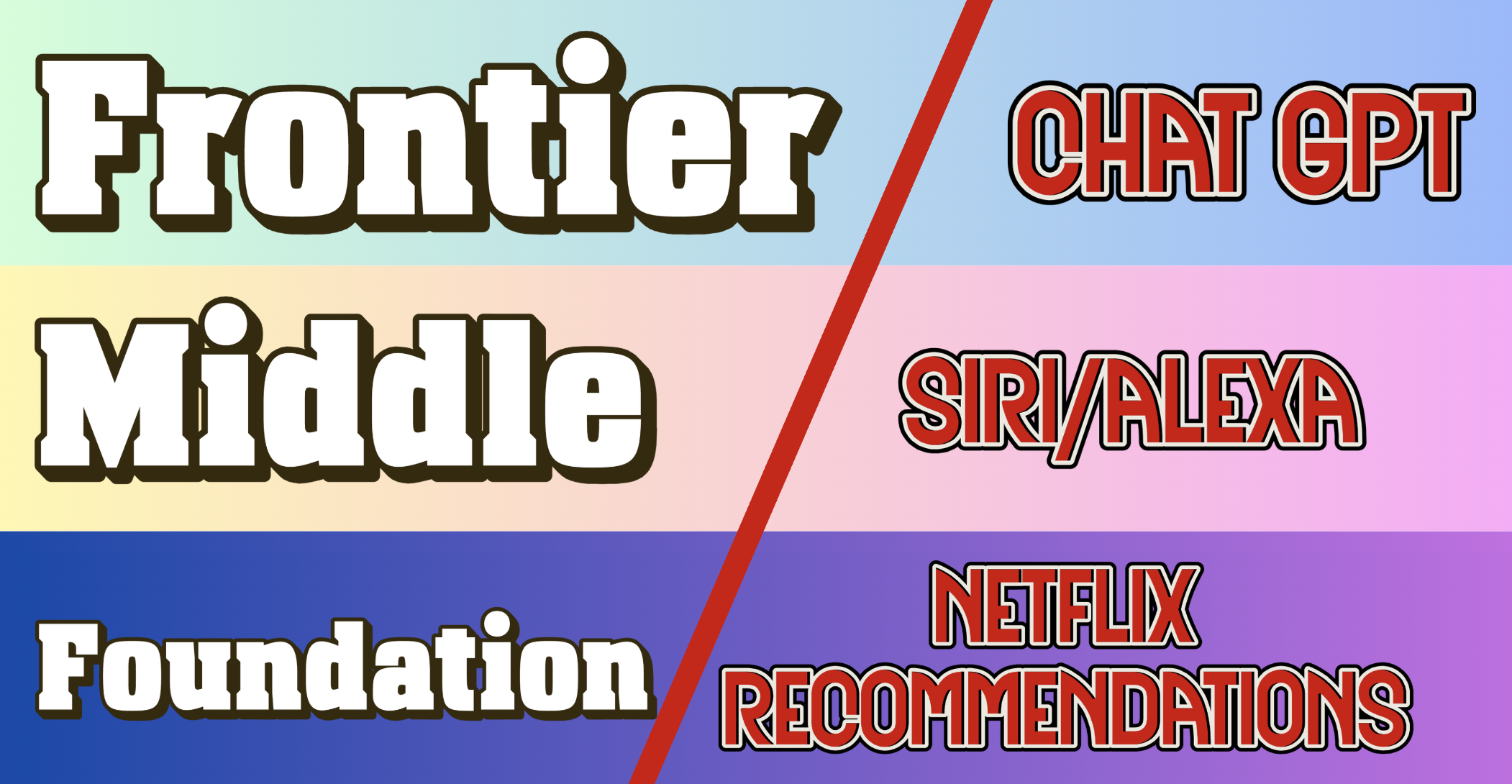
At the bottom of the AI hierarchy sits what we might call “narrow AI” – systems designed to do one specific task well. These are the recommendation engines suggesting movies on Netflix, the fraud detection systems protecting your credit card, and the simple voice assistants that can tell you the weather.
These systems excel at pattern recognition within limited domains.
They’re powerful but constrained. They can’t transfer knowledge from one domain to another. Your spam filter can’t suddenly help you with travel recommendations.
This foundation layer has been with us for decades, quietly improving our digital experiences without much fanfare. But it set the stage for everything that followed.
The Middle Layer
The middle of our AI hierarchy contains systems that can work across multiple domains and begin to understand context. This is where we find the first generation of voice assistants like Siri and Alexa, as well as early language models.
These systems can handle a variety of tasks and maintain some context across interactions.
They represent a significant leap forward because they begin to understand human language in more natural ways.
What makes this middle layer special is its ability to connect different types of information. When your smart speaker can both play music and order groceries, it’s demonstrating this cross-domain capability.
The Current Frontier
At the top of today’s AI hierarchy sit large language models like ChatGPT and voice cloning technologies. These systems don’t just recognize patterns or work across domains.
They can generate new content that feels human.
The breakthrough here is that these systems understand context at a much deeper level. They can maintain conversations, adapt to your specific needs, and create content that feels personalized. They’re not just responding to commands. They’re collaborating with you.
Where We’re Headed Next
The next evolution in AI will bring even more natural interactions. We’re moving toward systems that can maintain long-term memory of your preferences and history. They’ll understand not just what you say, but why you might be saying it.
In the family legacy space, we’re developing interactive video agents that will let you have conversations with digital versions of family members. Imagine having a video call with your great-grandmother, hearing her actual voice, seeing her image, and learning her stories firsthand.
These systems won’t just store information. They’ll make it accessible in the most human way possible through natural conversation.
The Human Element Remains Essential
Despite these advances, the human element remains central. AI can help us preserve voices and stories, but it can’t replace the importance of human connection.
The technology works best when it enhances our natural desire to connect across generations.
The most exciting applications aren’t about replacing human interaction but enriching it. When a child can hear their great-grandparent’s voice telling stories about the past, technology is strengthening family bonds, not replacing them.
Practical Applications Today
Right now, families can already use AI to create interactive family trees with voice recordings. Soon, they’ll be able to have video conversations with digital versions of family members. These applications make complex technology accessible to everyday people.
The key is keeping the technology simple to use while making it powerful enough to capture the richness of human stories. When technology feels intimidating, people won’t use it. Our goal is to make these advanced capabilities as easy to use as taking a family photo.
The AI hierarchy continues to evolve, but its true value comes from how it improves our lives. For families, that means creating new ways to preserve and share the stories that connect generations. The technology is remarkable, but the human connections it enables are what truly matter.