


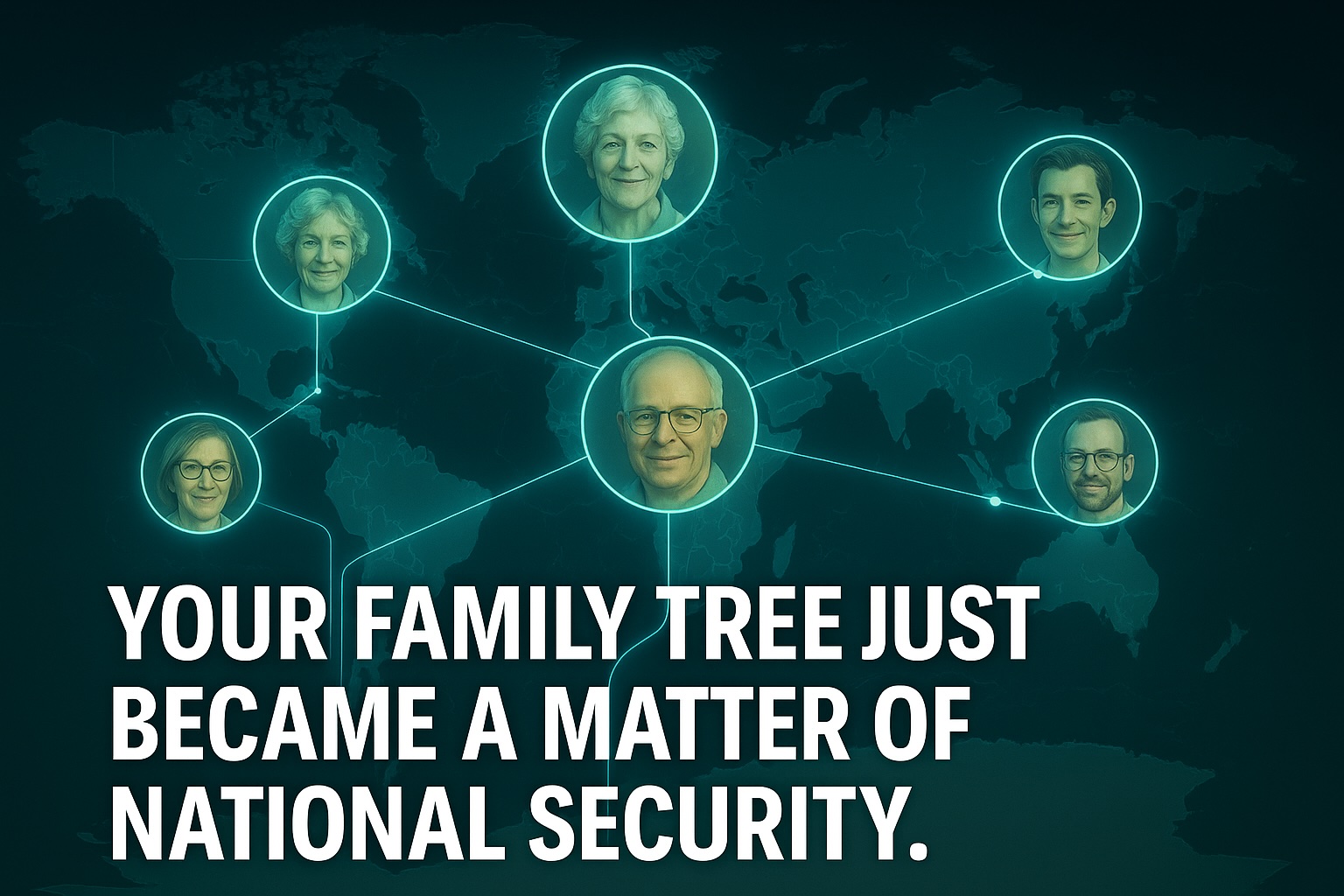
Your family tree just became a matter of national security. It sounds like science fiction, but the reality is stranger and more significant than you might imagine.
As the founder of Family Voices AI, I’ve witnessed firsthand how AI is transforming family history preservation. What started as a tool for connecting generations has quietly evolved into a geopolitical chess piece.
Let’s unpack this surprising development.
The Digital Family Album Revolution
Remember those dusty photo albums in your attic? They’re getting a high-tech makeover. AI-powered tools now allow us to preserve voices, reconstruct family trees, and even create interactive ancestors.
It’s not just about convenience. These technologies are reshaping how we understand our roots and identities. But there’s more to the story.
When Family History Meets Global Politics
Governments have taken notice of this digital family revolution. They’re increasingly using AI-powered family history tools to reconstruct historical narratives and reinforce national identities.
Why does this matter? Because the stories we tell about our past shape our future. And now, those stories are being influenced by algorithms and national agendas.
The New Soft Power
Countries with advanced AI capabilities aren’t just leading in tech. They’re gaining a new form of “soft power” the ability to influence global narratives about cultural heritage and identity.
Imagine a world where the most compelling version of your family’s history comes from a foreign government’s AI. It’s not as far-fetched as it sounds.
The Hidden Costs of Digital Immortality
As we rush to preserve our family legacies digitally, we’re facing unexpected challenges. The creation of “digital afterlives” is raising complex ethical and legal questions.
Who owns your great-grandmother’s AI-generated stories? Can they be used in international disputes over heritage or territory? These aren’t theoretical questions they’re tomorrow’s legal battlegrounds.
The Energy Elephant in the Room
There’s another cost we rarely discuss: energy. Running sophisticated AI systems to maintain millions of family histories requires enormous computing power. As these systems scale up, so does their environmental impact.
We’re creating digital time capsules, but at what cost to our planet’s future?
Navigating the Future of Family Legacy
So, what can we do? As someone deeply involved in this field, I believe awareness is the first step. We need to approach AI-powered family history tools with both excitement and caution.
Here are some key considerations for the future:
1. Data sovereignty will become a family issue. Be mindful of where and how your family’s data is stored and processed.
2. The definition of “family heritage” may become more fluid. AI could uncover connections that challenge our current understanding of lineage and nationality.
3. Energy-efficient AI will be crucial. As users, we should demand transparency about the environmental costs of these services.
4. Digital literacy will include understanding the geopolitical implications of personal data. It’s time to start those conversations.
A Call for Conscious Preservation
The future of family history is digital, dynamic, and deeply intertwined with global politics. As we embrace the amazing possibilities of AI in preserving our legacies, we must also stay alert to its broader implications.
Your family stories are precious. They’re also more powerful than you might have realized. As we write the next chapter of human history, let’s ensure we’re the ones holding the pen not just algorithms or geopolitical interests.
The family album of the future is being created today. What story do you want it to tell?