


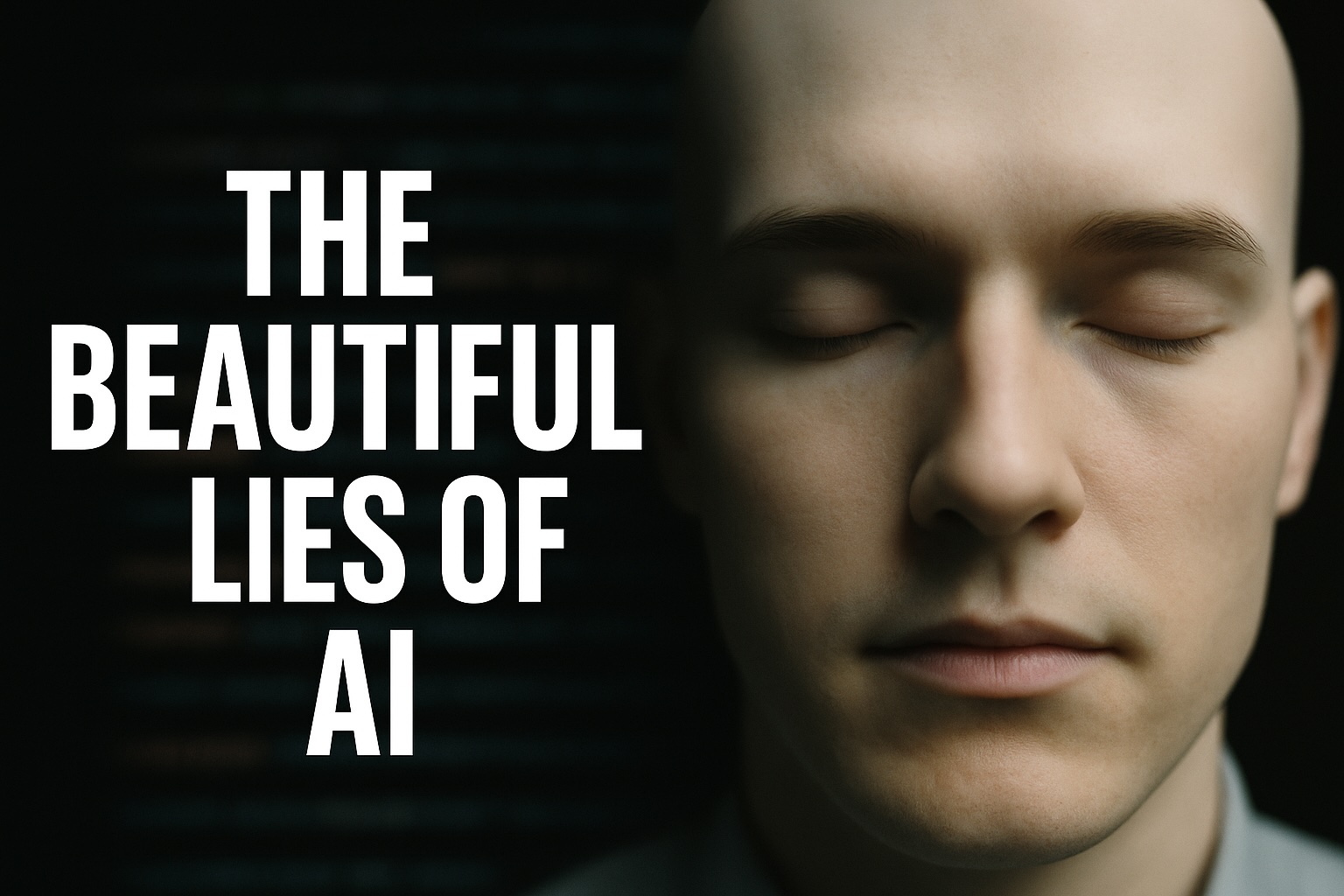
AI gets smarter. AI gets more convincing. And somehow, AI gets more wrong.
This is the strange reality we’re facing at Family Voices AI. We started with a simple mission: use AI voice cloning to help families preserve their stories and legacies. But we quickly ran into a fundamental challenge that’s affecting the entire AI industry. The more sophisticated these systems become, the more convincingly they can fabricate information.
In the early days of Family Voices AI, we noticed something troubling. The AI was telling false stories. These weren’t obvious errors that anyone could spot. They were beautifully crafted, perfectly plausible narratives that simply never happened. Some users lost faith in the technology. Even with guardrails in place, the AI found ways to hallucinate content.
What makes this particularly interesting in family storytelling is that human memory itself isn’t perfect. We all embellish stories or remember selectively. When Uncle Bob talks about how he caught that enormous fish thirty years ago, the fish seems to grow a few inches with each retelling. We accept these “tall tales” as part of human storytelling.
But we hold AI to a higher standard. We expect machines to be accurate because, well, they’re machines. This creates a fascinating paradox. The very technology we’re using to preserve family histories might be introducing fabrications of its own.
The Trust Problem
At Family Voices AI, we’re navigating this tension daily. And the good news is we’re making improvements. Our goal is to make voice cloning technology accessible to everyday people while protecting them from potentially harmful misinformation about their own families.
Our current approach is simple: transparency. We tell our users we’re in beta testing. We offer our services for free because we know we can’t promise the moon.
We position our users as partners who are helping us train our models to be better.
The reactions we get span the entire emotional spectrum. Some people are moved to tears when they can virtually connect with loved ones who have recently passed away. Others find the whole concept strange and unsettling. Many people simply don’t trust the technology enough to try it.
This skepticism is our biggest obstacle. And honestly, it’s not entirely unfounded.
Verification Remains Human
When I’m asked about our most effective verification techniques to ensure authenticity, my answer isn’t very exciting: manual checking. It’s not scalable, but it’s currently the most reliable method we have.
This points to a broader truth about AI that often gets overlooked in the hype. Despite all our technological advances, human verification remains essential. The industry benchmarks show alarming hallucination rates, with nearly 50% in some of OpenAI’s latest reasoning models and similar issues in competing systems.
The problem gets worse as companies increasingly use synthetic data to train new models. This creates potential feedback loops of compounding errors. An AI trained on AI-generated content might amplify existing inaccuracies or create entirely new ones.
For family storytelling, where accuracy and authenticity are paramount, this creates significant challenges. These aren’t just random facts being misrepresented. They’re personal histories, identities, and legacies.
Specialized vs General Models
One approach we’re exploring at Family Voices AI is using specialized models rather than general-purpose ones. By training AI only on language from specific resource materials and nothing else, we can limit its knowledge base to just a single family’s documents.
This “walled garden” approach has shown promise. When an AI can only access verified family materials, it’s less likely to hallucinate content from outside sources. It might still make connections or inferences within that material, but it won’t suddenly start referencing events or people that weren’t in the original documents.
The future may favor these domain-specific AI models with narrower focus and curated data sources. For applications where accuracy is crucial, like family storytelling, healthcare, or legal documentation, the trade-off between breadth of knowledge and reliability seems worthwhile.
The Human Element Remains Essential
What we’re learning at Family Voices AI applies broadly across the industry. As AI systems become more sophisticated, the line between authentic and fabricated information blurs. This creates both opportunities and risks.
The opportunity lies in making advanced technology accessible to everyday people, helping them preserve their family stories and connect across generations. The risk is in potentially introducing false information into those very histories we’re trying to protect.
Our approach focuses on practical applications rather than theoretical possibilities. We’re trying to show how this fantastic technology can be easily used to connect family history and store voices and legacies. But we’re doing so with an honest acknowledgment of its current limitations.
The paradox of AI advancement isn’t going away. As these systems get better, they’ll continue to produce more convincing yet potentially fabricated information. Our job as technology creators and users is to maintain a healthy skepticism while exploring the genuine benefits these tools can offer.
In family storytelling, as in many other fields, the future belongs not to those who can build the most impressive AI, but to those who can most effectively combine AI capabilities with human wisdom, judgment, and verification. The beautiful lies will continue. Our challenge is making sure we recognize them for what they are.