


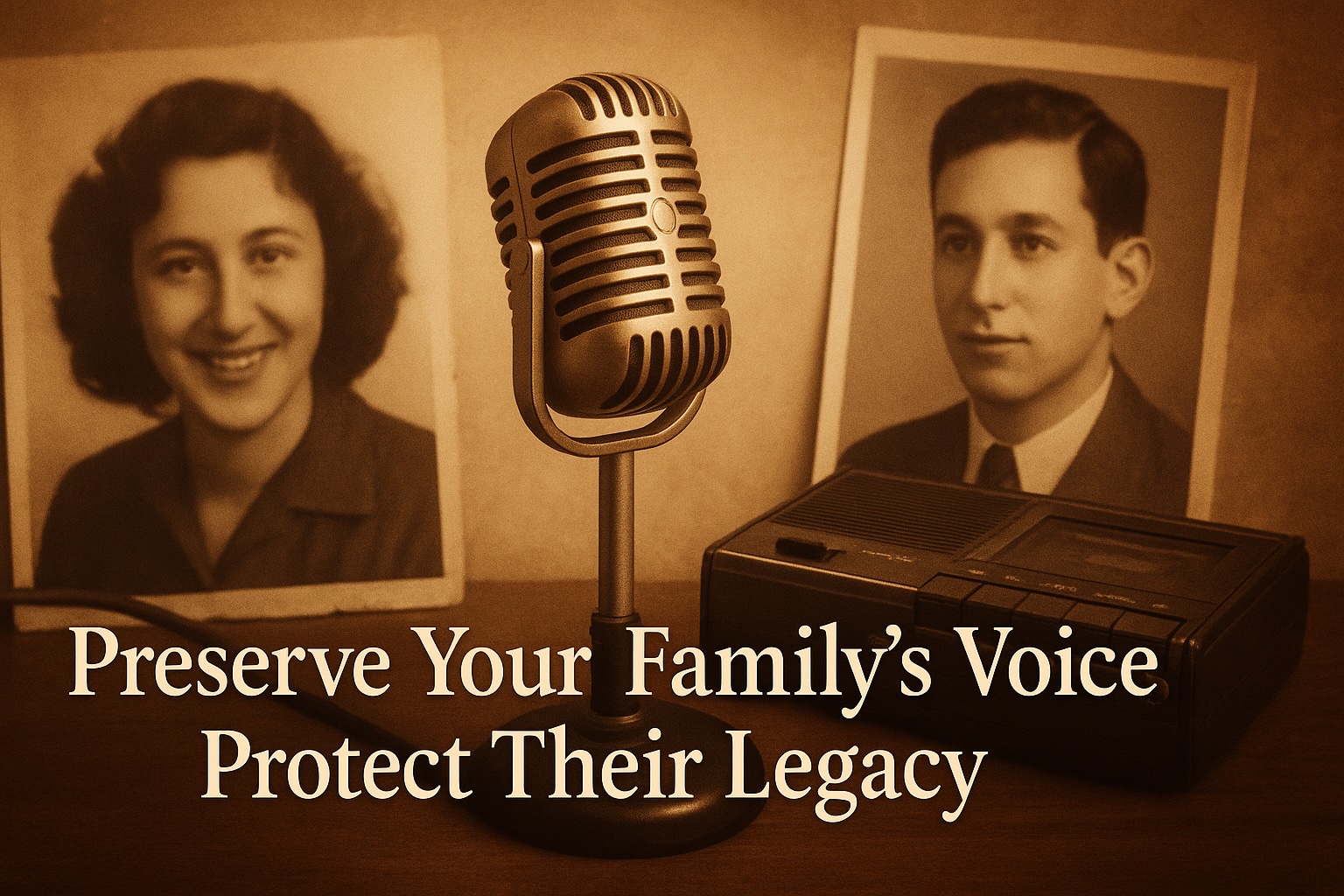
We live in a photo-obsessed culture. Our smartphones hold thousands of images, our social media feeds overflow with visual memories, and we’ve become expert curators of our visual histories.
But what if we’re preserving the wrong thing?
What if the sound of your mother’s laugh holds more emotional power than her smile in a photograph? What if your father’s storytelling voice carries more of his essence than any image ever could?
The science suggests this might be true.
The Neurological Power of Voice
Research shows that hearing a voice can flood you with feelings of comfort, joy, or longing as it activates the same regions in your brain that process emotions and memories. The human voice triggers emotional connections in ways photographs simply cannot.
This makes evolutionary sense. Before cameras existed, we recognized and bonded with our family members through their voices.
Even more fascinating, Stanford researchers discovered that children’s brains show a heightened response to their mother’s voice over any other sound. The neural connection extends beyond auditory areas to include regions involved in emotion, reward processing, and social functions.
Voice is literally hardwired into our sense of connection.
Stories That Photos Can’t Tell
A photograph captures a millisecond. A voice recording captures a narrative.
Think about your family stories – the ones passed down through generations. The humor, wisdom, and personality in those tales lives in the telling.
Studies confirm that meaningful connections form through voice in ways that written or visual records alone cannot match. When we hear vulnerability in someone’s voice, we feel less alone. Stories connect us as human beings.
A photograph of your grandfather smiling tells you what he looked like. A recording of him telling his favorite childhood story tells you who he was.
The AI Revolution in Voice Preservation
This is where technology is creating unprecedented possibilities.
AI voice cloning technology now allows us to preserve family voices in interactive ways that were science fiction just a few years ago. We can create digital voice models that maintain the unique qualities that make each voice special.
Imagine future generations not just seeing photos of their ancestors but having conversations with them.
This isn’t distant future talk. Companies like ours are already helping families create interactive family trees based on voice cloning and interviews.
The technology allows families to preserve not just voices but the stories, wisdom, and personality behind them.
What We Lose When Voices Fade
Unlike photographs, which we’ve been carefully preserving for generations, voice recordings are often overlooked, stored on deteriorating media, or lost entirely.
How many of us have recordings of our grandparents’ voices? Our great-grandparents? Yet we likely have dozens of their photographs.
This asymmetry represents a profound loss of family heritage.
When a voice disappears, we lose inflections, accents, speech patterns, and verbal mannerisms that photographs can never capture. We lose the auditory thread that connects generations.
Creating Your Family’s Voice Legacy
So what can you do about it?
Start recording family stories now. Use your smartphone to capture holiday gatherings, family reunions, or simply sit down with older relatives for intentional interviews. It’s so easy (and free) with our mobile web app.
Our app does all the heavy lifting by providing curated questions to spark the storytelling process. It even has a wheel to spin, making it feel like a game.
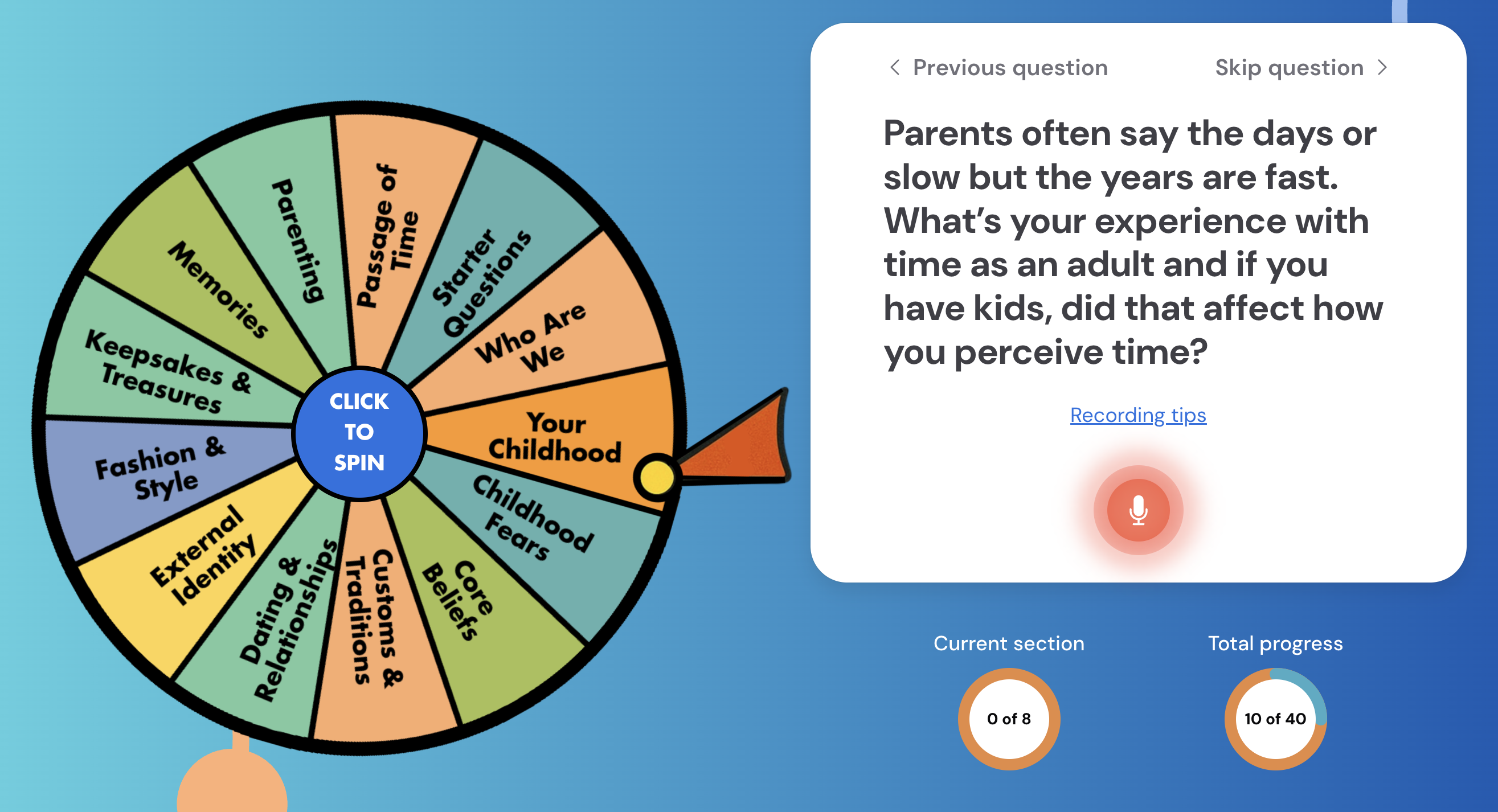
Consider working with voice preservation services, like Family Voices AI, that can help organize, digitize, and protect these recordings for future generations.
The technology exists to create interactive family histories where voices remain alive long after people are gone.
Beyond Preservation to Connection
This isn’t just about archiving the past. It’s about creating bridges between generations that haven’t met yet.
Your great-grandchildren may never meet you in person. But they could hear your voice telling stories about your life.
They could ask questions and hear your responses through AI that’s trained on your voice patterns and life stories.
The photos you leave behind will show them what you looked like. But your voice will show them who you were.
In our rush to capture visual memories, we’ve neglected our most primal form of connection – the human voice. As AI technology advances, we have an unprecedented opportunity to preserve not just images of our loved ones, but the essence of who they are.
That’s a legacy worth saving.